
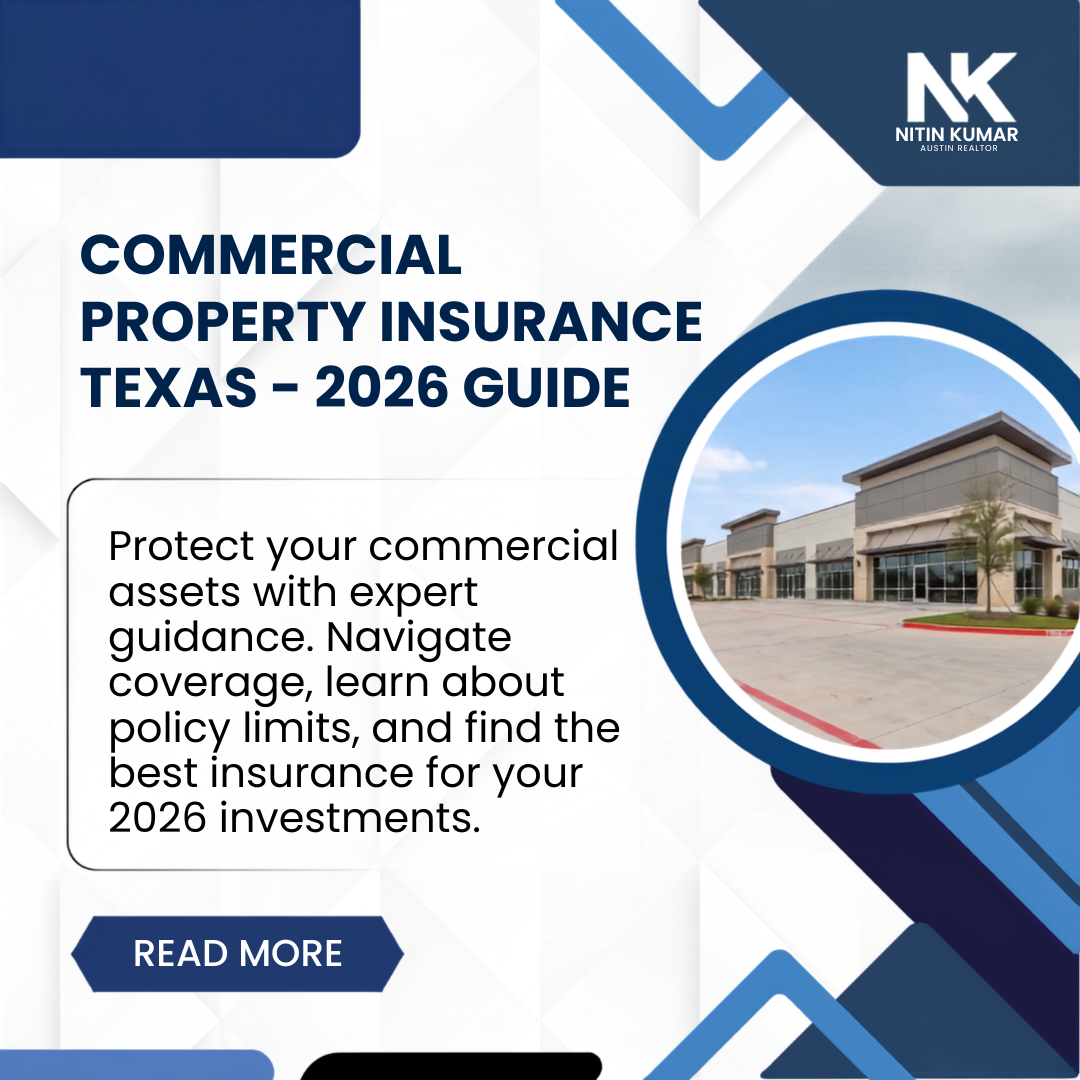
Running a Texas business in 2026 entails navigating an ever-changing landscape where booming industries, fast-paced economic growth, as well as intense weather extremes clash. Right from the Gulf Coast hurricanes and the tornadoes of North Texas to the statewide hailstorms and unpredictable flooding, the businesses in Texas face unique exposures, each of which make obtaining the correct commercial property insurance texas vital.
In recent years, both the frequency as well as the severity of natural disasters have led commercial property insurance premiums up by around 10-40%, especially in regions where the risk is high. Not being insured or even being uninsured can have devastating fiscal consequences, potentially wiping out numerous years of investment in one event.
Our comprehensive guide covers all the details you need to be aware about navigating the 2026 insurance market, obtaining core coverages, handling costs, and safeguarding the physical assets of your firm. Let us dive right into it:
The Three Primary Layers of Property Coverage
When policy-shopping in Texas, the insurers generally offer three different tiers of protection as per your budget as well as risk tolerance. Here is a brief look at each:
- Basic Form Policy: This is deemed the most restrictive and affordable option. It encompasses a rigidly limited list featuring explicitly named perils, including the likes of fire, lightning, damage by smoke, explosions, hailstorms or windstorms (with specific regional exceptions), as well as riots and vandalisms.
- Broad Form Policy: Includes every basic peril in addition to extra structural hazards, like water damage caused by broken pipes or plumbing overflows (except for external floods), structural collapse from ice or snow’s weight, and falling objects such as trees.
- Special Form Policy (Open Perils): This is deemed the industry standard for established business entities. It covers every property risk and threat by default, unless a certain hazard is named explicitly on the exclusion list of the policy.
Unique Challenges & Threats in Texas
The vast geography of Texas brings an extensive spectrum of weather-associated hazards that have a direct impact on underwriting as well as coverage requirements:
- Hurricanes & tropical storms along the Gulf Coast
- Tornadoes across Central and North Texas
- Intense hailstorms striking almost statewide
- Frequently-occuring and rising groundwater.
Besides weather, numerous economic factors play a significant role. The rapid growth of Texas, booming sectors in technology, energy & agriculture, and active booms in construction have led asset values through the roof. Meanwhile, the market of insurance has majorly tightened. Much fewer carriers are readily willing to write policies in zones of high-risk, paving the way towards higher premiums in addition to greater reliance on excess lines.
Regulatory Environment in 2026
The TDI (Texas Department of Insurance) looks after the insurance landscape of the state. The key regulatory postulates in the year 2026 includes:
- Coastal Mandates: Certain coverage requirements in zones that are high-risk, like specialized windstorm or flood insurance.
- Ordinance & Law Compliance: Regulations that might compel building owners to upgrade structures to the current municipal codes post a covered loss.
- Speciality Underwriting: Stricter guidelines for real estate that stay outside of the generic risk parameters.
Main Coverages Every Texas Business Requires
A solid commercial property insurance texas policy seamlessly integrates numerous vital coverages in order to address the unique operational as well as environmental threats:
- Building Coverage
Safeguards your business’ physical structure, such as walls, roofs, foundations, as well as fixtures that are permanently installed. Policies are generally structured around the replacement costs (the total amount needed to reconstruct with new materials at current costs) or the actual cash value (which also factors in depreciation). Given the rising construction expenses across Texas, periodically updating your building valuation prevents serious out-of-coverage gaps.
- Contents Coverage
Protects the movable assets of your company, such as office furniture, computers, infrastructure of technology, raw materials, and inventory. Restaurants, offices, and retailers depend heavily on this specific coverage to replace important assets post a loss.
- Business income (Interruption) Insurance
Replaces the lost net income in addition to covering fixed ongoing costs (like rent, employee payroll, utilities, etc.) if your business entity is forced to shut down temporarily because of a covered property loss. The indemnity period is the determining factor on how long these fiscal disbursements continue during the repair process.
- Ordinance and Law Coverage
Encapsulates the unexpected expenditures needed to bring older/historic buildings up to the current municipal safety as well as the building codes during the repair process post a covered loss. Without this specific endorsement, code-mandated plumbing, electrical, or structural enhancements come fully out of pocket.
- Flood Insurance
Generic commercial property insurance in Texas does not cover the following – rising groundwater, storm surges, or the overflowing of water bodies. Separate flood insurance is mandated to be secured via the NFIP (National Flood Insurance Program) or private commercial flood carriers.
- General Liability Insurance
Although different from property insurance, general liability is very often bundled or paired to safeguard against third-party claims for any type of bodily injury or customer property damage that occurs on your premises.
Factors Affecting Insurance Costs in Texas
Properly understanding what drives your premiums aids you in managing expenses in an effective manner.
| Cost Factor | Description | Impact on the Premiums |
| Weather and Catastrophe Trends | Very frequent billion-dollar storm losses all across Texas | Elevated rates & stricter wind or hail underwriting |
| Location and Type of Property | Coastal vs. urban vs. rural placement | Coastal properties witness 30%-40% higher rates |
| Age of Building & Construction | Condition of the roof, outdated wiring, materials that are fire-resistant | Structures that are newer and code-compliant qualify for discount |
| Claims History and Loss Runs | Frequency & severity of previous property claims | Clean records much lower rates; frequent claims risk non-renewal |
| Economic Pressures | Inflation, shortage of labor, and disruptions in supply chain | Elevates insures asset values as well as overall premiums |
Proven Tactics to Lower Costs of Commercial Property Insurance
The owners of business can proactively regulate or control expenditure without comprising security by implementing the following strategies:
- Increase Deductibles: Switching to an elevated deductible (like raising wind or hail percentage deductibles or standardized deductibles) leads to immediate premium savings. Make sure that your cash reserves can effectively absorb the difference.
- Maintain & Upgrade Property: Bettering aging roofs, installing monitored systems of fire suppression, and ensuring compliance of code unlocks highly valuable insurer discounts.
- Install Advanced Security: The addition of security cameras, motion lighting, as well as intrusion alarms majorly deters theft and can minimize commercial property insurance in Texas expenses.
- Leverage a BOP (Business Owner’s Policy): For businesses that are small to medium with lower risk profiles, bundling property as well as general liability insurance into a Business Owner’s Policy or BOP provides comprehensive protection at a very discounted rate.
- Review Insurance Values Yearly: Schedule frequent appraisals to avoid paying for inflated coverage, all while nullifying dangerous gaps of underinsurance.
The Top Commercial Property Insurance Providers in Texas
Selecting the best carrier relies significantly on your geographic location as well as risk profiles:
Non-Coastal Providers
- Travelers: Wide national presence, exceptional resources risk management, and customizable options for large-sized businesses and technology firms.
- EMC Insurance Firms: Highly competitive pricing as well as tailored policy structures that are ideal for small-to-moderate-sized offices as well as manufacturing facilities.
- Chubb: Premier solutions with top-notch claims service, specialized coverage of equipment, and exceptional programs of risk prevention for high-value assets.
Coastal Providers
- CrossCover Insurance Services: Speciality lies in crafted wind & hurricane protection with instant response times for claims in the case of coastal properties such as hotels and retail stores.
- Velocity Risk: Emphasizes on streamlined underwriting & very quick claims processing for windstorm-prone zones along the areas of Galveston, Corpus Christi, and the Gulf Coast.
Speciality Carriers and Surplus Lines
When traditional insurers deny coverage because of high-risk profiles or history of past claims, surplus lines, as well as specialty carriers give vital safety nets for complicated risks, renovations, or rural warehouses.
Step-wise Guide to Obtaining the Right Policy
- Evaluate Business Threats: Document your type of building, values of inventory, industry exposures, as well as the local environmental risks or hazards.
- Compare Structures of Policy: Assess Basic, Broad, and Special Form policies in addition to compulsory endorsements such as flood or ordinance and law coverage.
- Collect Underwriting Documentation: Compile the building’s construction details, records of maintenance, security system specifications, and previous loss runs.
- Obtain Multiple Quotes: Obtain proposals from standard carriers, regional specialists, as well as surplus lines brokers.
- Scrutinize Terms & Exclusions: Carefully review the limits of the policy, deductibles, clauses of co-insurance, and exclusions prior to signing.
- Partner with Knowledgeable Professionals: Partner up with trusted advisors who properly understand the complications of the insurance market of Texas.
- Conduct Annual Reviews: Reevaluate property values as well as the coverage limits annually to adapt to business growth as well as regulatory changes.
Secure Your Texas Business Today
Navigating the intricacies of commercial property insurance in Texas demands professional guidance and tailored protection. Whether you plan on expanding your operations or securing a brand new facility, ensuring all your assets are fully safeguarded against the unique weather and market conditions of Texas is important for long-term success.
All set to secure the right commercial property insurance policy? Get in touch with Nitin Austin Realtor today!
Frequently Asked Questions (FAQs)
Q. Are foods and earthquakes covered under the general commercial property insurance?
A. No. Standard policies of commercial property insurance explicitly exclude damage caused due to flood (rising groundwater) and earthquakes. Separate policies must necessarily be purchased through the NFIP or private speciality insurers.
Q. What does commercial property insurance generally cover?
A. It encompasses your physical building structure, permanent fixtures, furniture of the office, equipment for manufacturing, inventory, and can possibly include business interruption income if the operations get halted by a peril that is covered.
Q. How can I minimize my commercial property insurance’ premiums?
A. You can lower the premiums of your commercial property insurance by increasing your deductibles, upgrading your roof and systems of security, maintaining a clear and clean history of claims, conducting yearly valuations of assets, and bundling policies through a BOP when eligible.